CIFRI Awards
Barrackpore, Kolkata, W.B.
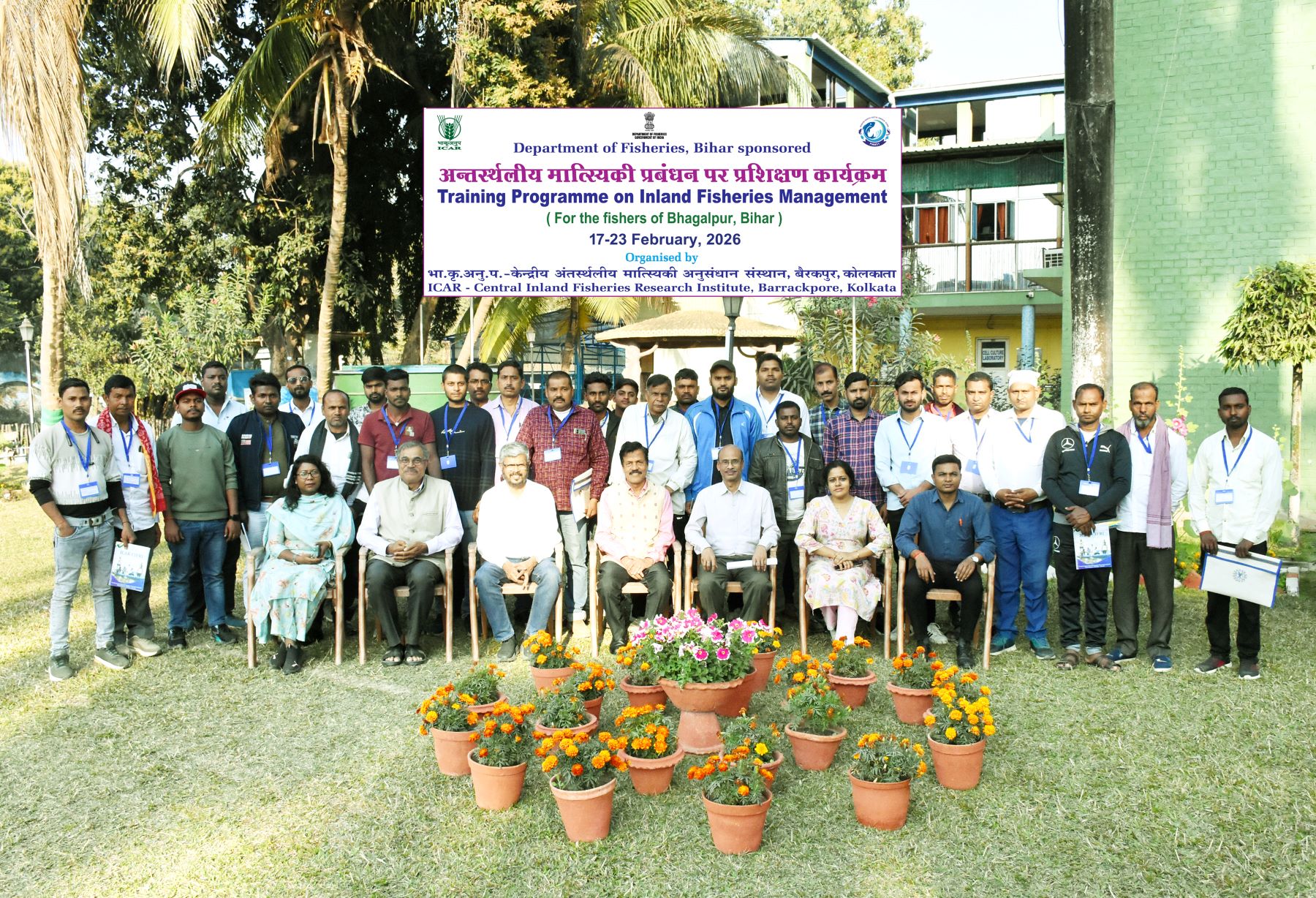
A seven-day training programme on Inland Fisheries Management was successfully conducted at ICAR-CIFRI, Barrackpore, from 17 to 23 February 2026 for thirty one trainees from Bhagalpur district, Bihar. The programme was organized with the aim of strengthening scientific aquaculture practices and enhancing livelihood opportunities.
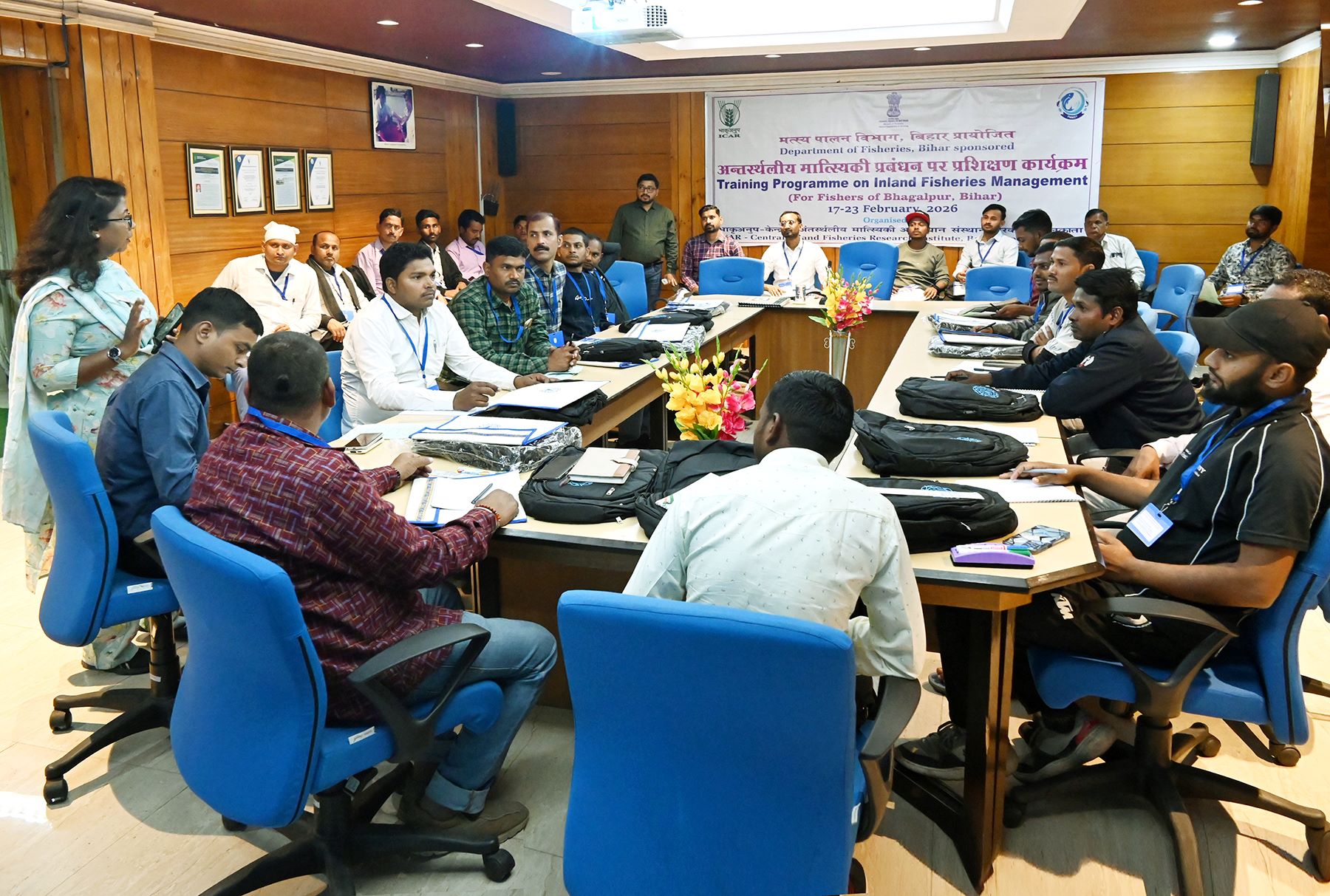
 The training covered comprehensive aspects of pond management, including site selection, pond preparation, liming, fertilization, and embankment maintenance. Special emphasis was laid on water quality management, focusing on parameters such as pH, dissolved oxygen, temperature, and ammonia control. Participants also received hands-on guidance in nursery and rearing pond management, with practical inputs on stocking density, feeding schedules, grading, and improving survival rates.
 The concept of composite fish culture was elaborated to demonstrate how compatible species combinations can maximize productivity. Indian Major Carps such as Rohu, Catla, and Mrigal, along with grass carp and common carp, were discussed as suitable candidate species. Sessions on feed management highlighted balanced nutrition, feed formulation, and efficient Feed Conversion Ratio (FCR) practices to ensure cost-effective production.
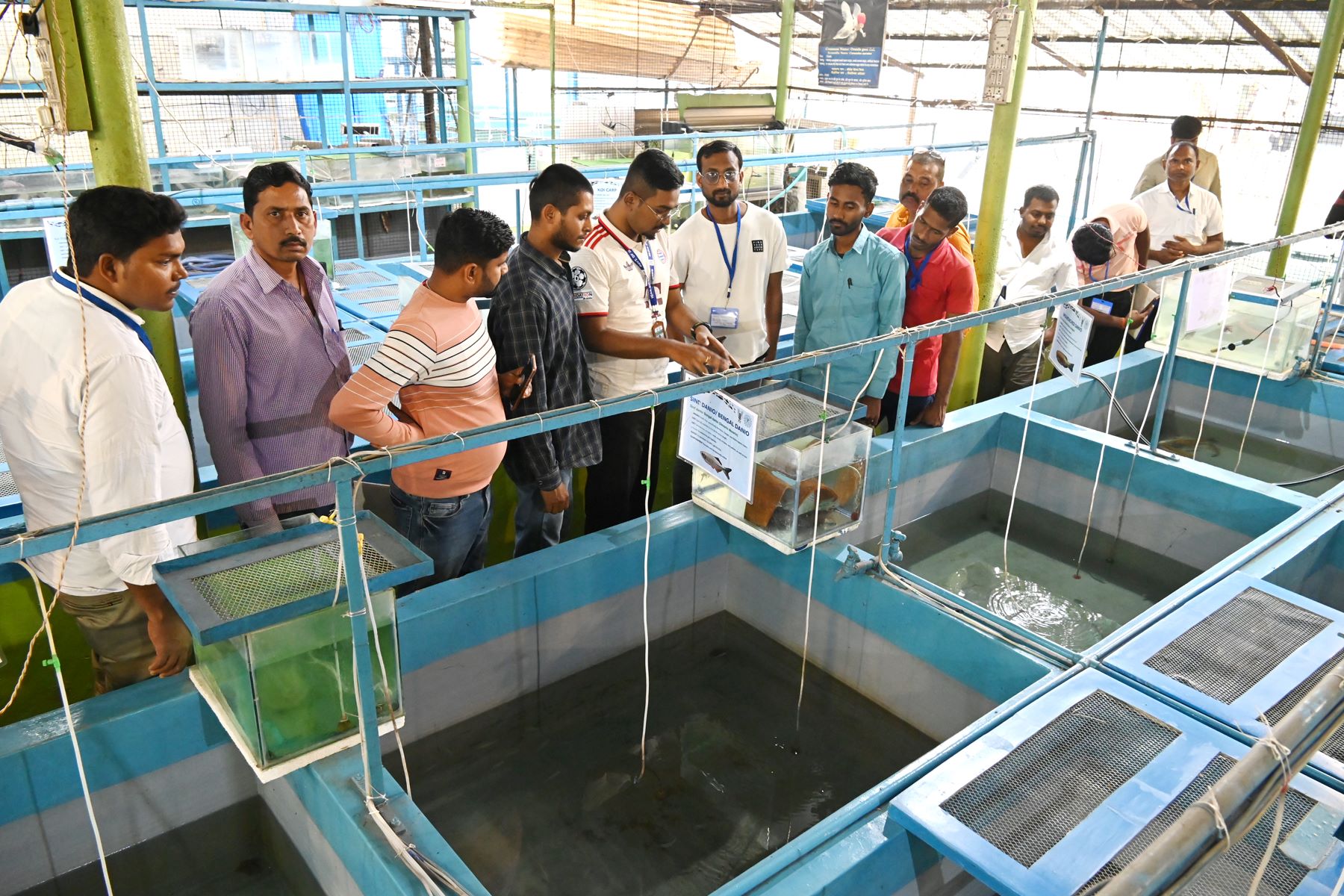 Modern aquaculture technologies including Biofloc and Recirculatory Aquaculture Systems (RAS) were introduced as sustainable and water-efficient production models. Discussions on climate change adaptation and zero-budget fish farming encouraged environmentally resilient and economically viable practices tailored to local conditions.
As part of the practical exposure, trainees visited a fish farm, an ornamental fish market, and the East Kolkata Wetlands to observe integrated wastewater-fed fisheries and scientific aquaculture systems.
Modern aquaculture technologies including Biofloc and Recirculatory Aquaculture Systems (RAS) were introduced as sustainable and water-efficient production models. Discussions on climate change adaptation and zero-budget fish farming encouraged environmentally resilient and economically viable practices tailored to local conditions.
As part of the practical exposure, trainees visited a fish farm, an ornamental fish market, and the East Kolkata Wetlands to observe integrated wastewater-fed fisheries and scientific aquaculture systems.
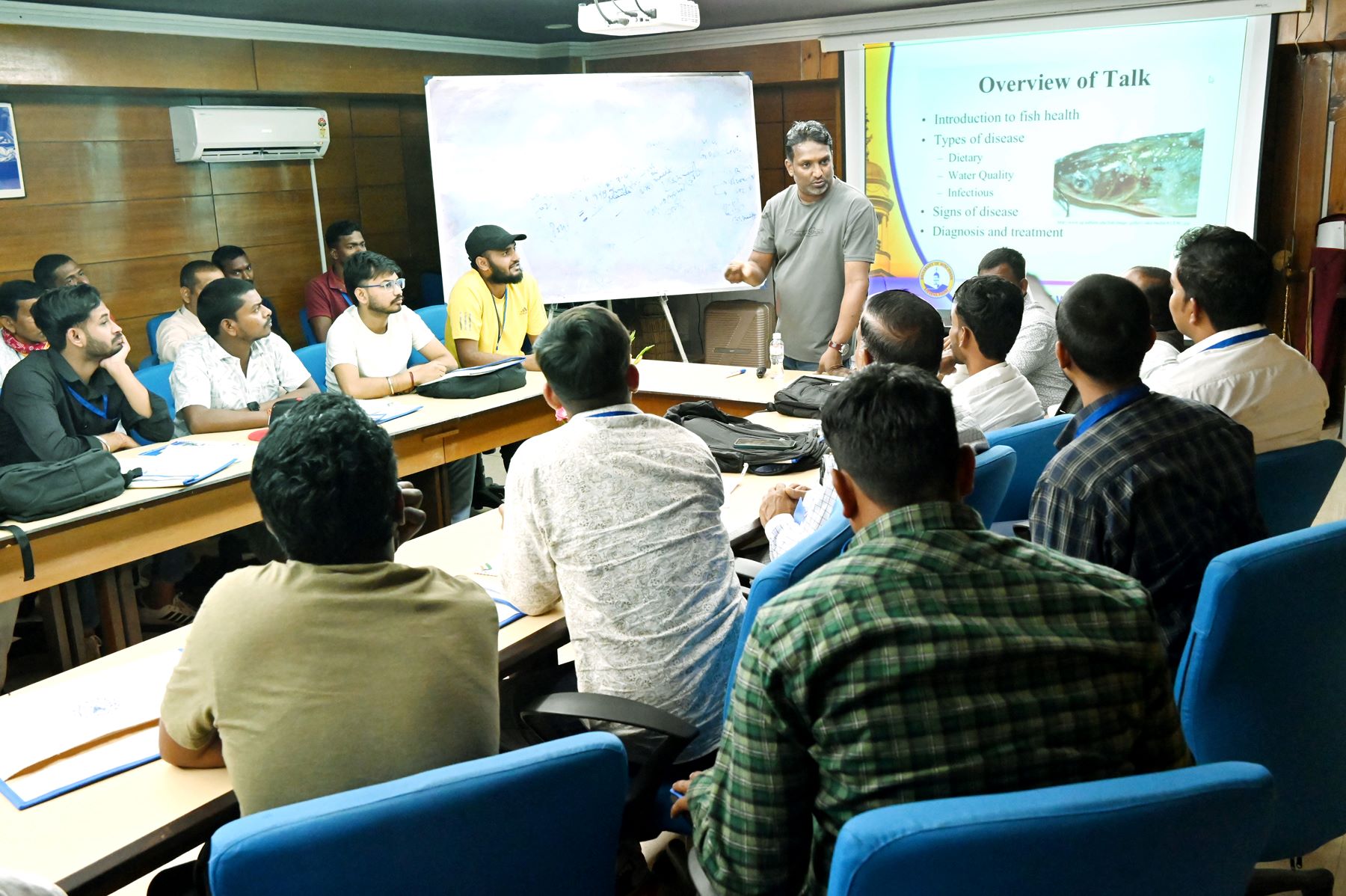 The programme was coordinated by Dr. Anjana Ekka and Dr. Mitesh Ramteke, Scientists of the institute under the guidance of Dr. B.K. Das, Director, ICAR-CIFRI,. The training significantly enhanced participants’ technical competence, fostered entrepreneurial motivation, and promoted sustainable inland fisheries development in Bhagalpur district