ICAR-CIFRI observed World Wetland Day 2026 for protecting wetlands
2nd February, 2026 Akaipur beel, Nadia, West Bengal
Wetlands play important roles in providing many ecosystem services including water purification, biodiversity conservation, fish production, and water supply, highlighting their roles in ecological balance, supporting life and improve livelihood. Due to anthropogenic activities, climate change and other factors, the environmental condition of many wetlands of India are becoming increasingly vulnerable.
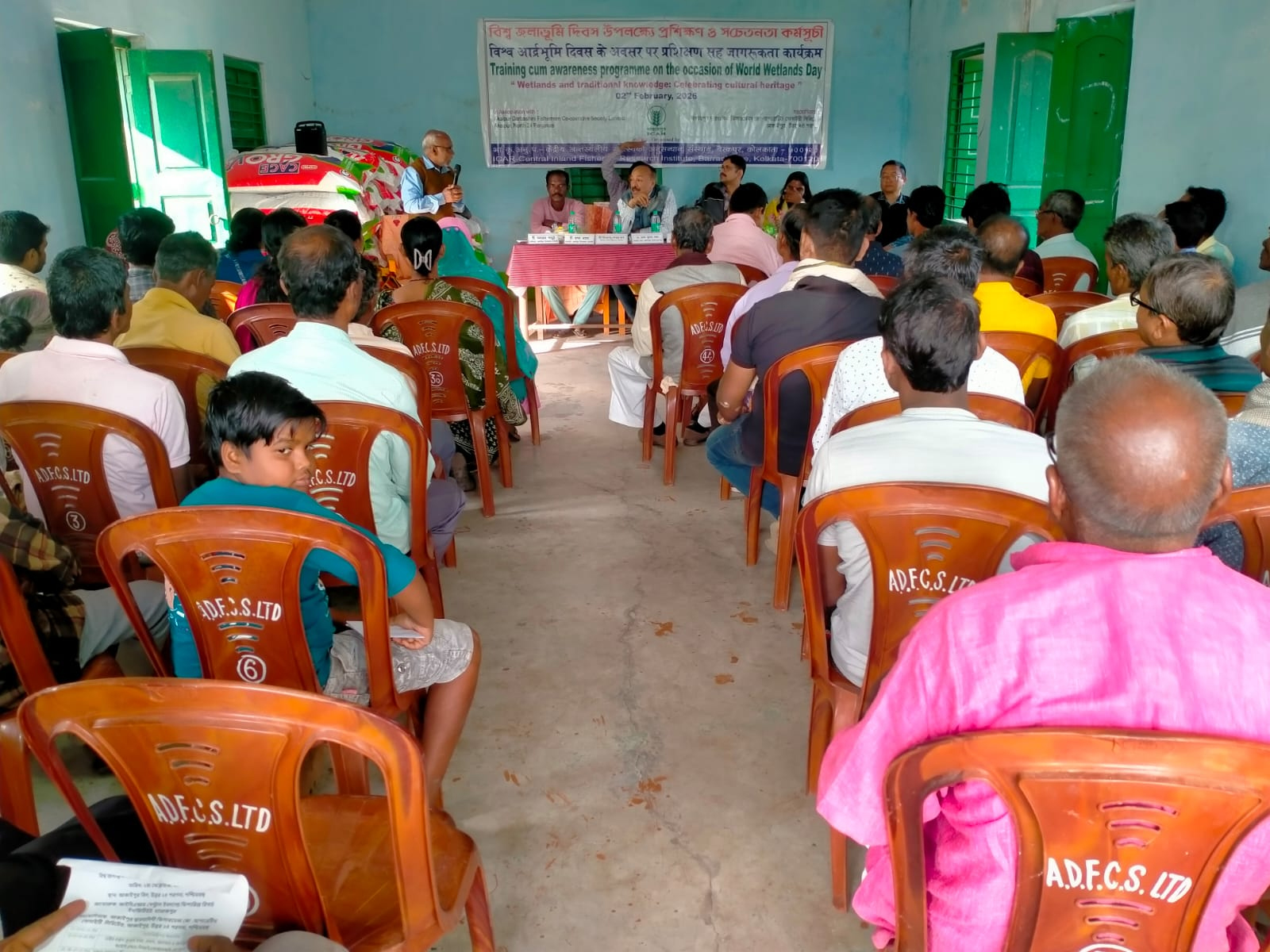
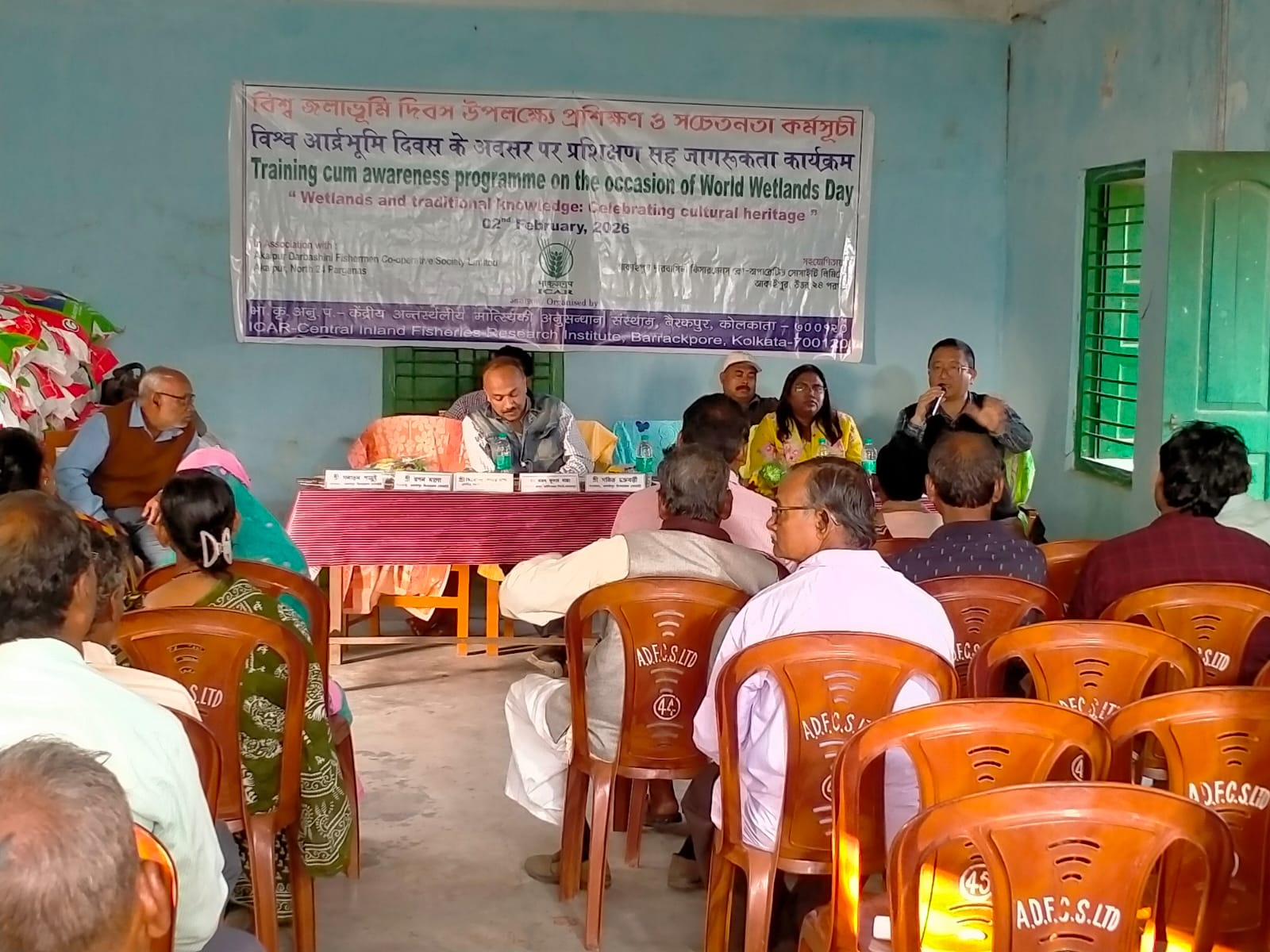
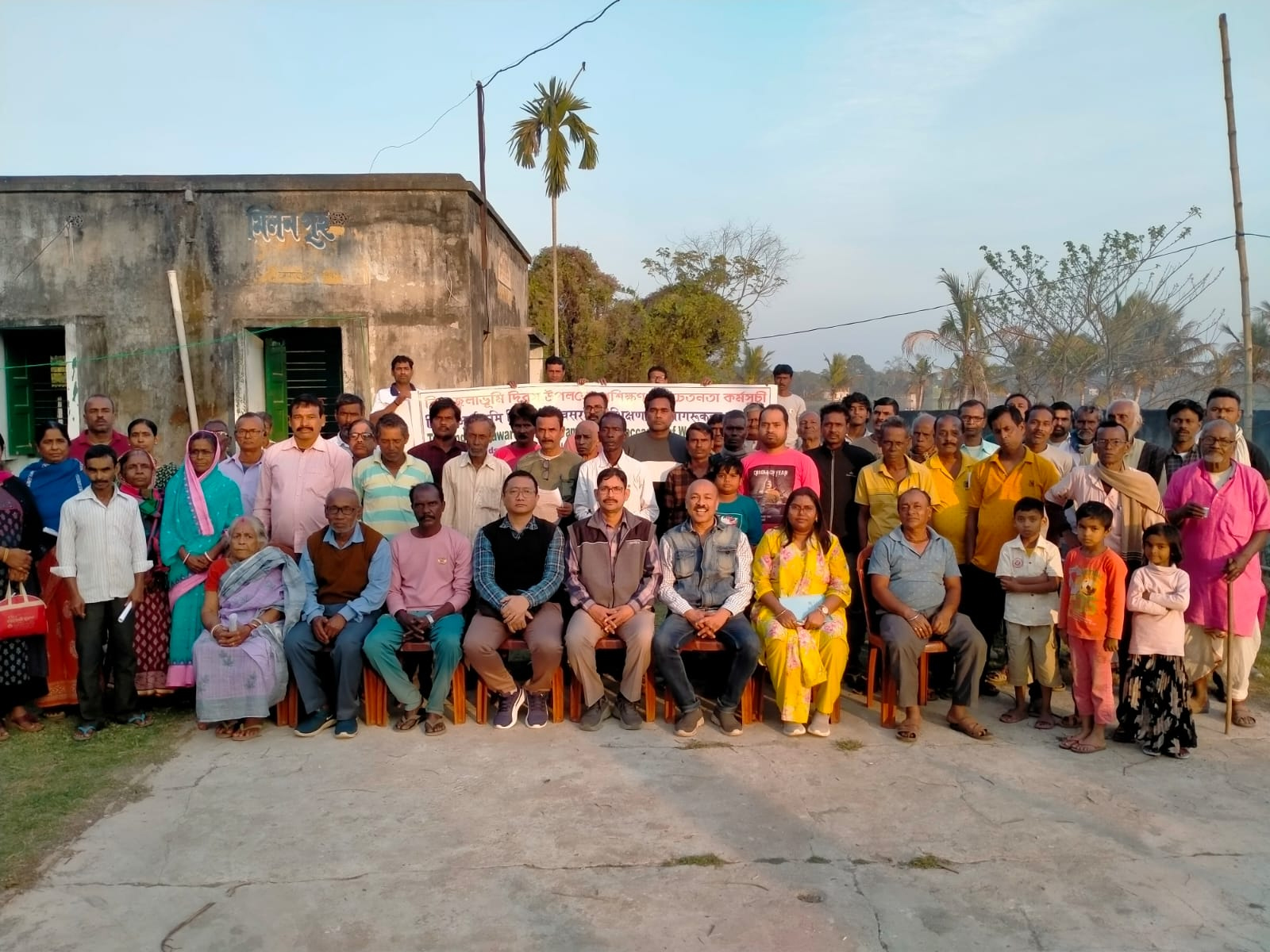
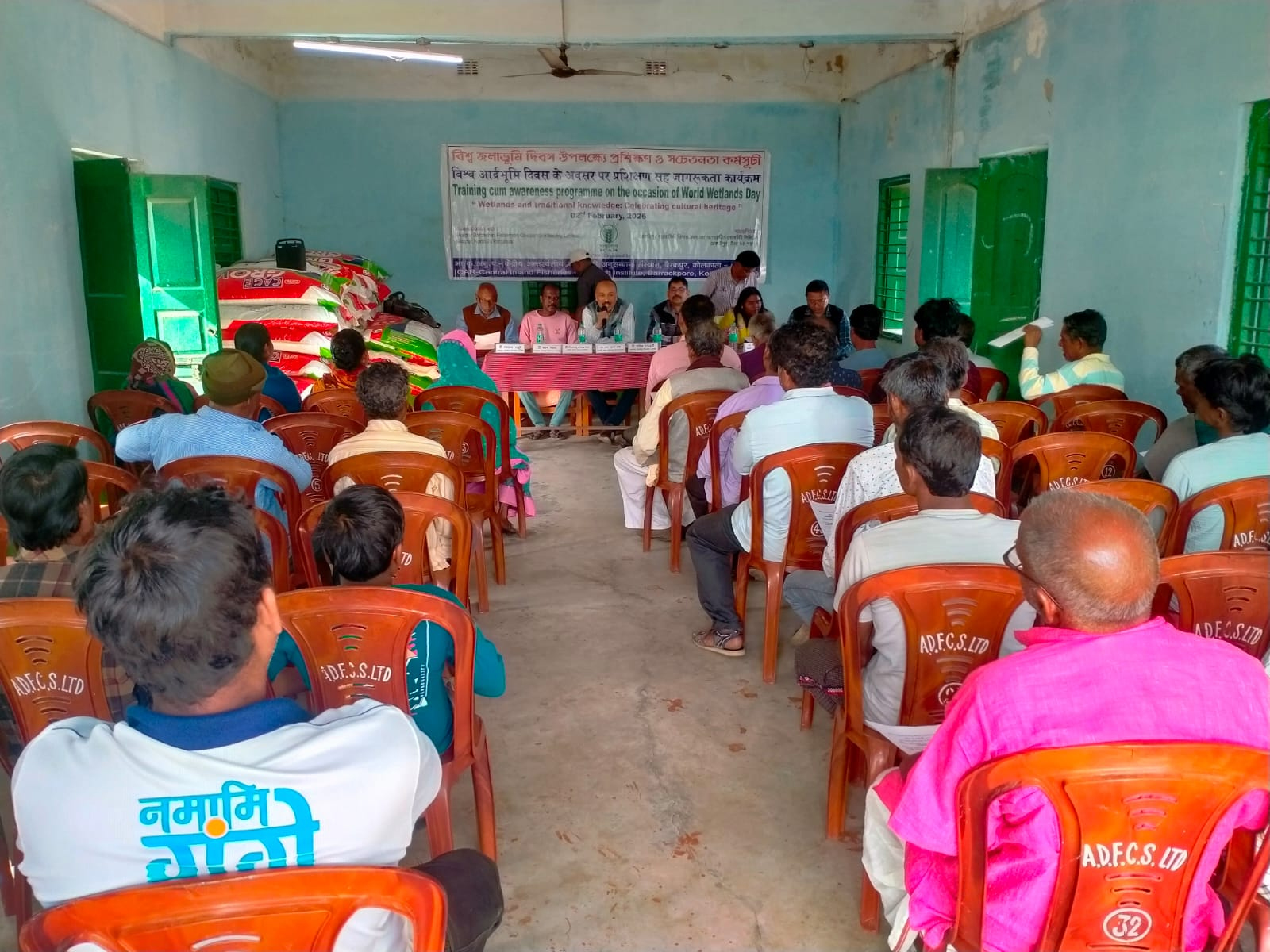
It is essential to put an effort to restore and conserve this vital ecosystem with participation of the stakeholders at ground level like fishers associated with the wetland. ICAR-Central Inland Fisheries Resources Institute conducted a training cum awareness programme with the theme of the year 2026 i.e. “Wetlands and Traditional Knowledge: Celebrating Cultural Heritage.” on the occasion of the World Wetland Day 2026 celebration on 2nd February 2026 at Akaipur beel, Nadia, West Bengal to extend training on sustainable management of wetland fisheries and sensitize the fishing community about conservation of wetland. The programme was held in association with the Akaipur Dwarbashini Fishermen’s Co-operative Society Limited, Akaipur, North 24 Parganas, West Bengal. During the programme, Dr. Ranjan K. Manna, Principal Scientist and Head, Reservoir and Wetland Division, ICAR-CIFRI, described different activities of ICAR-CIFRI in wetlands under the leadership of the director, Dr. Basanta K. Das. He also highlighted the importance and role of all different trophic levels of wetlands for different ecosystem services and emphasized the needs of important factors like river connectivity, aquatic macrophytes, etc for the conservation of precious biodiversity of wetlands and urged the fishers to actively participate for the conservation and restoration of wetland to ensure the long-term sustainability of fish production. Dr. Asit Kumar Bera, Principal Scientist discussed about different dimensions of recurrent fish disease associated mortality in wetlands including possible preventive measures. Mr. Sanatan Parui, Chairman, and Mr. Swapan Malo, Secretary of the Akaipur Dwarbashini Fishermen’s Co-operative Society Limited, discussed various issues and challenges especially anthropogenic pollution they face for managing wetland fisheries.
Dr. Lianthuamluaia, Senior Scientist and Dr. Pritijyoti Majhi, Scientist, ICAR-CIFRI, also sensitized the farmers on sustainable fish production management strategies and the available technologies for development of wetland fisheries. The fishers actively participated in the Scientist-Farmers Interaction session during the programme. During the interaction session, several issues related to the aquatic environment and fisheries management of wetland, along with potential mitigation measures, were discussed. Major problem identified were change of ecological regime from submerged macrophyte dominated to plankton dominated system (complete absence of submerged macrophytes) causing disappearance of most of the Small Indigenous Fishes like Colisa fasciata, Gudusia chapra, Nandus nandus, and prawns. The programme was attended by more than 80 fishers of the wetland belonging to Akaipur Dwarbashini Fishermen’s Co-operative Society Limited. Vote of Thanks was delivered by Mr. Abdul Ajij Al Amin, Technical Staff, ICAR-CIFRI.