CIFRI Awards
Barrackpore
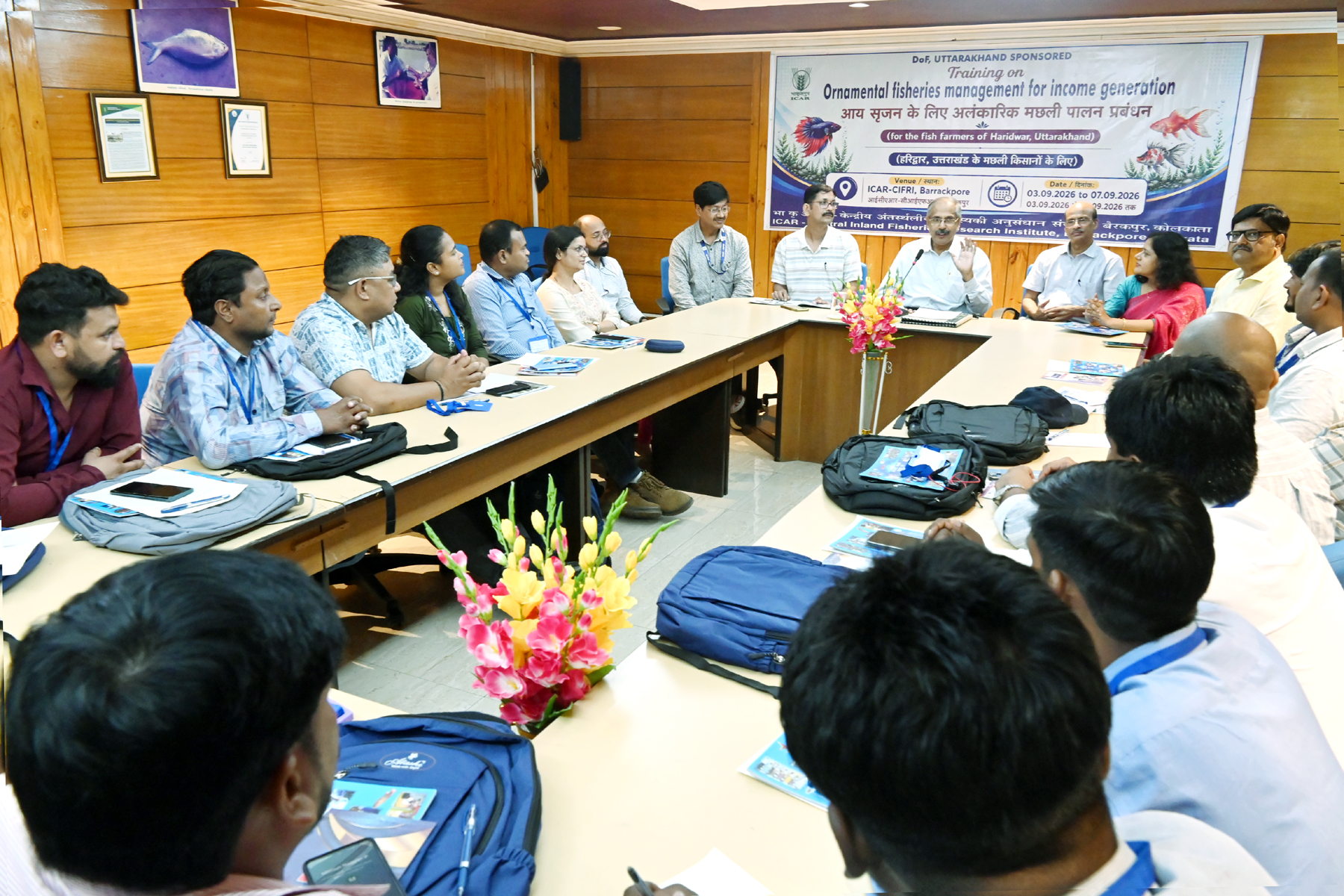
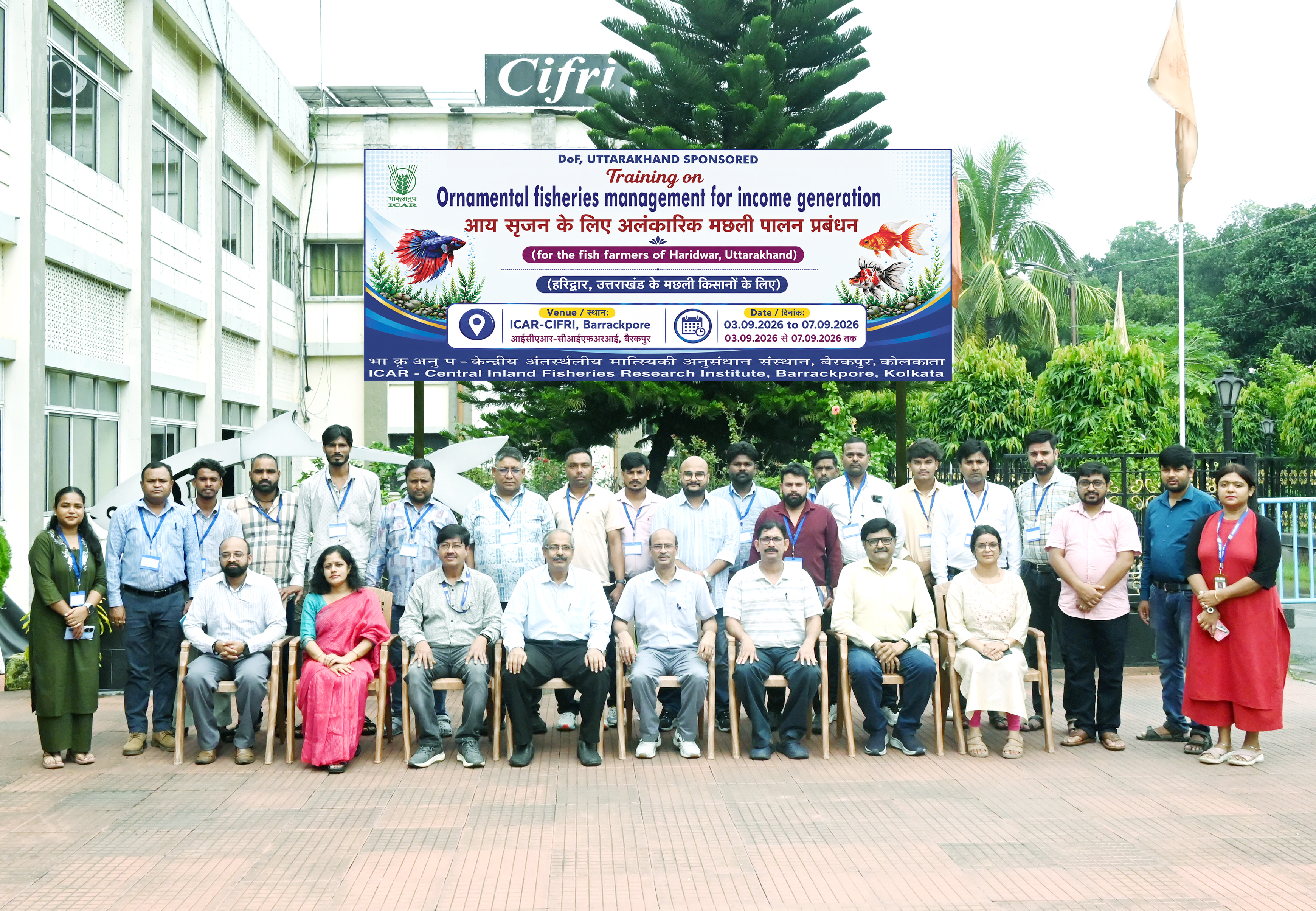
In a strategic initiative to promote livelihood diversification, rural entrepreneurship and technology-driven income generation, the ICAR-Central Inland Fisheries Research Institute (ICAR-CIFRI), Barrackpore, organized a five-day training programme on “Opportunities in Ornamental Fisheries Management for Income Generation” for 18 farmers from Haridwar, Uttarakhand, from September 3–7, 2026.
The programme, inaugurated by Dr.Pradip Dey, Director, ICAR-CIFRI, underscored the emerging role of ornamental fisheries in creating new livelihood opportunities, rural enterprises and employment across the fisheries value chain. He emphasized that the sector should be viewed not merely as an ancillary farming activity but as a knowledge- and skill-intensive enterprise with potential for production, breeding, aquarium services, marketing, trade and value addition.Dr.Dey highlighted that the development of such diversified livelihood opportunities is closely aligned with the national vision of Viksit Bharat @2047, which seeks to build a prosperous, inclusive and self-reliant rural economy through innovation, entrepreneurship, technology and efficient utilization of natural resources.
“The transformation of rural livelihoods requires moving from subsistence-oriented activities towards knowledge-based, technology-enabled and market-linked enterprises. Ornamental fisheries can provide an important pathway for this transition by creating opportunities for farmers and rural youth in production, breeding, aquarium management, services and marketing. Such livelihood diversification can contribute meaningfully to the vision of a self-reliant and economically empowered rural India under Viksit Bharat @2047,” said Dr.Pradip Dey.
From Training to Enterprise Development
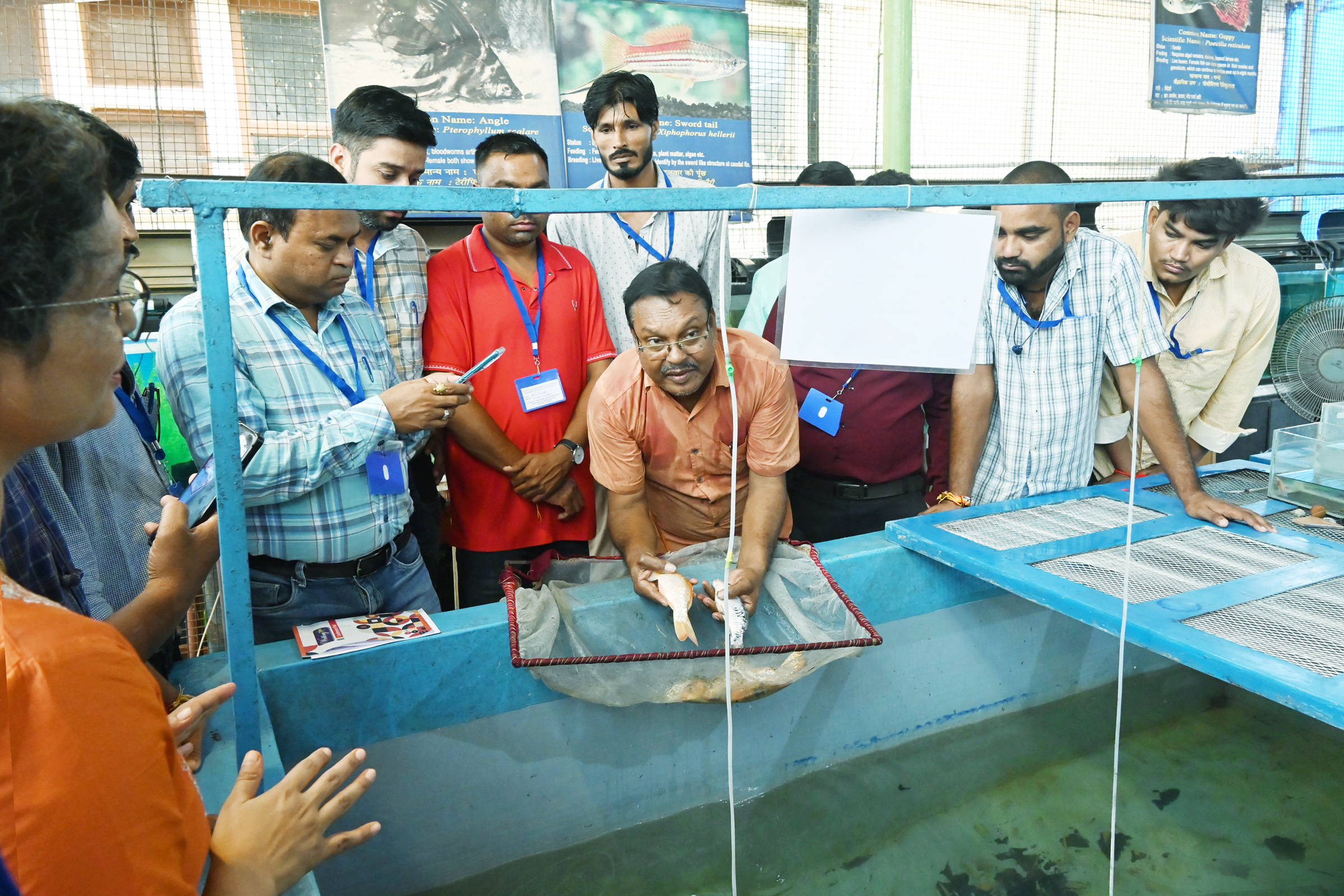
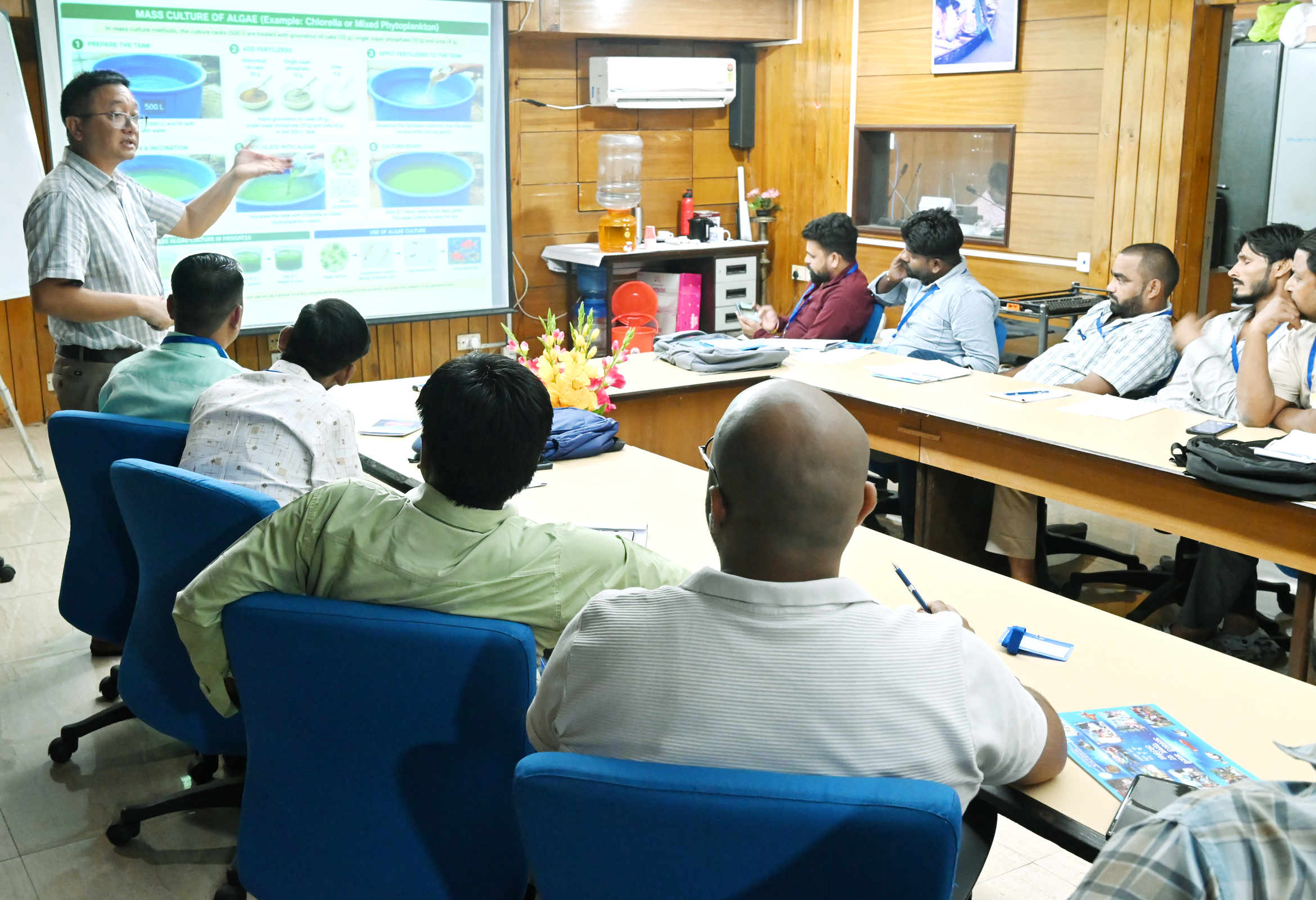
The training programme adopted an end-to-end enterprise development approach, combining scientific knowledge with practical skills and market exposure. Participants were trained in freshwater ornamental fish breeding and seed production, aquarium fabrication and management, water quality management, fish health, live-feed culture, feed preparation and enterprise planning. The emphasis was on enabling farmers to understand the complete ornamental fisheries value chain—from production and technology adoption to market access and income generation. Participants were also sensitized to government schemes and institutional support available for establishing ornamental fish production and allied enterprises.
Connecting Farmers with Markets
A key component of the programme was the exposure visit to Galiff Street and Das Nagar ornamental fish markets, providing participants with direct exposure to the commercial ecosystem of ornamental fisheries.Interactions with traders, growers and farmers enabled the participants to understand market demand, species preferences, consumer behaviour, trading practices, pricing and value-chain dynamics. Such market-oriented exposure is critical for developing enterprises based on demand-driven production rather than production-led marketing. The initiative thus seeks to bridge the gap between scientific research, skill development and market opportunities, enabling farmers to make informed decisions on enterprise selection and investment.
Policy Support through PMMSY
The programme highlighted the substantial policy support available under the Government of India’s PradhanMantriMatsyaSampadaYojana (PMMSY) for strengthening fisheries infrastructure, production and entrepreneurship. During 2020–21 to 2024–25, 2,465 ornamental fish rearing units, 207 integrated breeding and rearing units, five freshwater ornamental fish brood banks and 144 recreational fisheries units were approved at a total cost of ₹230.45 crore. Such interventions demonstrate the potential for ornamental fisheries to become an important component of rural enterprise development, livelihood diversification and the fisheries-based blue economy.
Building Rural Youth as Entrepreneurs
The training also emphasized the potential of ornamental fisheries to attract rural youth and educated farmers into new-generation enterprises. With relatively diverse entry points—including breeding, seed production, aquarium fabrication, retailing, online marketing, consultancy and aquarium maintenance—the sector can generate employment beyond primary fish production.
The programme therefore represents a shift from a conventional training-based approach towards a technology-to-enterprise model, wherein scientific knowledge, skill development, market intelligence and government support are integrated to facilitate sustainable livelihood outcomes.
ICAR-CIFRI’s Role in the Viksit Bharat Vision
Dr.Dey emphasized that agricultural and fisheries research institutions have a critical role in translating scientific knowledge into scalable livelihood solutions and strengthening the interface between research institutions, farmers, entrepreneurs and markets.
“For Viksit Bharat @2047, our objective is to create rural communities that are not only beneficiaries of technology but also entrepreneurs and value creators. ICAR institutes can play a catalytic role by taking proven technologies to farmers, building their capacities and connecting them with markets and institutional support,” he added.
Dr.Gunjan Karnatak and Dr.Mitesh Ramteke, Scientists, ICAR-CIFRI, coordinated the training programme and facilitated the technical sessions, practical demonstrations and market exposure activities.
The initiative reflects ICAR-CIFRI’s commitment to developing science-based, sustainable and market-oriented fisheries enterprises and strengthening the contribution of fisheries to rural prosperity. By integrating technology, skills, entrepreneurship, market access and policy support, ornamental fisheries can emerge as a promising avenue for livelihood diversification and inclusive rural economic growth—contributing to the broader national objective of a prosperous, self-reliant and developed India by 2047.