CIFRI Awards
Nadia District, W.B.
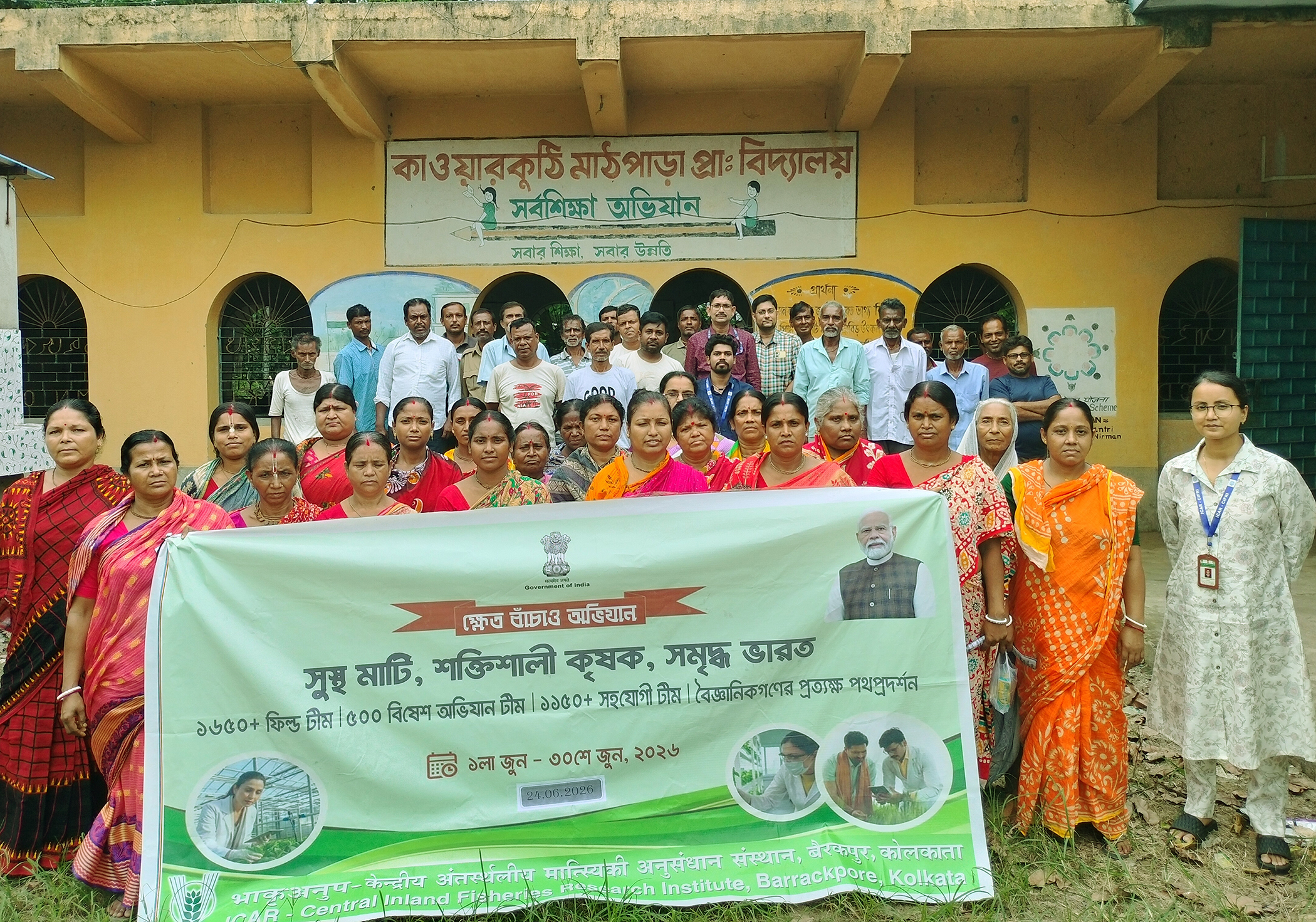
Reinforcing the critical connection between healthy soils, sustainable agriculture, and thriving aquatic ecosystems, the ICAR–Central Inland Fisheries Research Institute (ICAR-CIFRI), Barrackpore, launched a Khet Bachao Abhiyan at Khalsi Beel in Haringhata block of Nadia district on 24 June 2026. Organized in collaboration with Khalsi Udbastu Matsyajibi Samabay Samiti Limited, the campaign witnessed enthusiastic participation of over 71 farmers, including 23 women, from Uttarbrahmapur, Mathpara, and Khalsi villages.
The awareness drive highlighted growing concerns over unscientific fertilizer use and its cascading impacts on soil fertility, crop productivity, and wetland ecology. During field interactions, ICAR-CIFRI scientists observed that several farmers were cultivating crops such as jute and pointed gourd without Soil Health Cards and were applying fertilizers, particularly urea, without scientific recommendations.
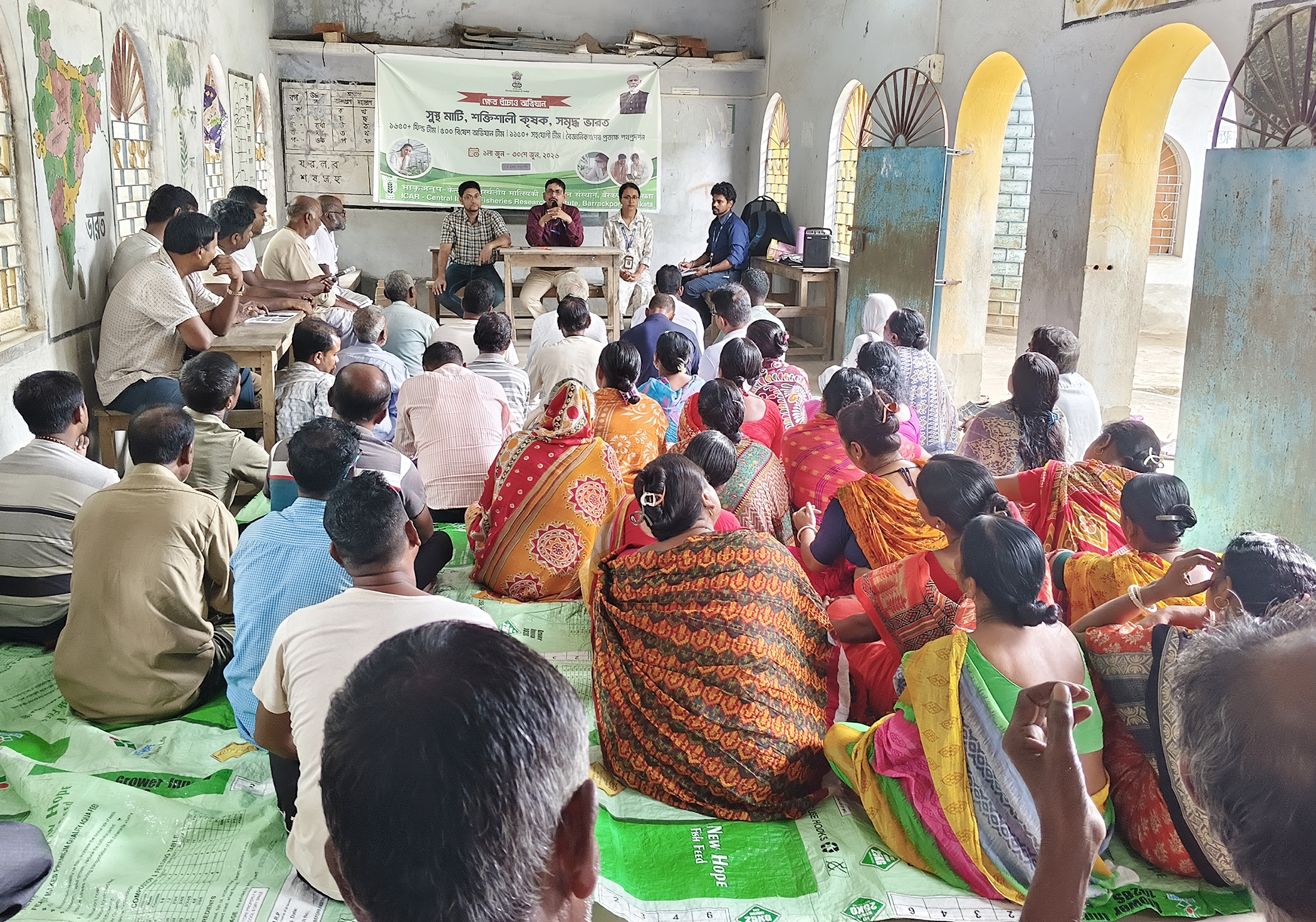
Farmers were encouraged to undertake regular soil testing through nearby Krishi Vigyan Kendras (KVKs) and adopt balanced nutrient management based on soil health assessments. The campaign advocated eco-friendly alternatives, including green manures, compost, biofertilizers, and organic inputs, as sustainable pathways for restoring soil vitality and reducing dependence on chemical fertilizers.
A major focus of the programme was the promotion of Dhaincha (Sesbania spp.), a proven green manure crop known for enriching soil organic matter, improving nitrogen availability, enhancing moisture retention, and lowering fertilizer requirements. Scientists also advocated Integrated Nutrient Management (INM) as a holistic approach for sustaining crop productivity while conserving natural resources.
Reflecting on the occasion, Dr. Pradip Dey described the Khet Bachao Abhiyan as “a collective commitment to restoring humanity’s covenant with soil and water bodies—the twin lifelines of our ecosystems and the silent foundations of food security, livelihoods, biodiversity, and civilization.” He underscored that healthy soils are not merely a production resource but a living legacy linking environmental sustainability, rural prosperity, and future generations.
Dr. A.K. Bera stressed the importance of soil testing, Soil Health Cards, balanced nutrient application, natural farming practices, and scientific water stewardship as complementary strategies for rebuilding soil resilience and fertility. Dr. Arun De highlighted the environmental risks associated with indiscriminate pesticide use and emphasized crop planning and sustainable nutrient management as key measures for reducing chemical dependency. Dr. M. Shaya Devi elaborated on the role of organic fertilizers and green manures in maintaining long-term soil health and agricultural sustainability.
The programme also sensitized farmers about flagship government initiatives, including PM-Kisan and the Kisan Credit Card (KCC) scheme. Progressive farmer Shri Debu Mandal shared practical experiences and success stories, fostering meaningful dialogue between scientists and farming communities.
Through this initiative, ICAR-CIFRI reaffirmed its commitment to promoting climate-resilient agriculture, conservation of aquatic biodiversity, and sustainable rural livelihoods, demonstrating how science-led interventions can simultaneously strengthen agricultural productivity and protect fragile wetland ecosystems.