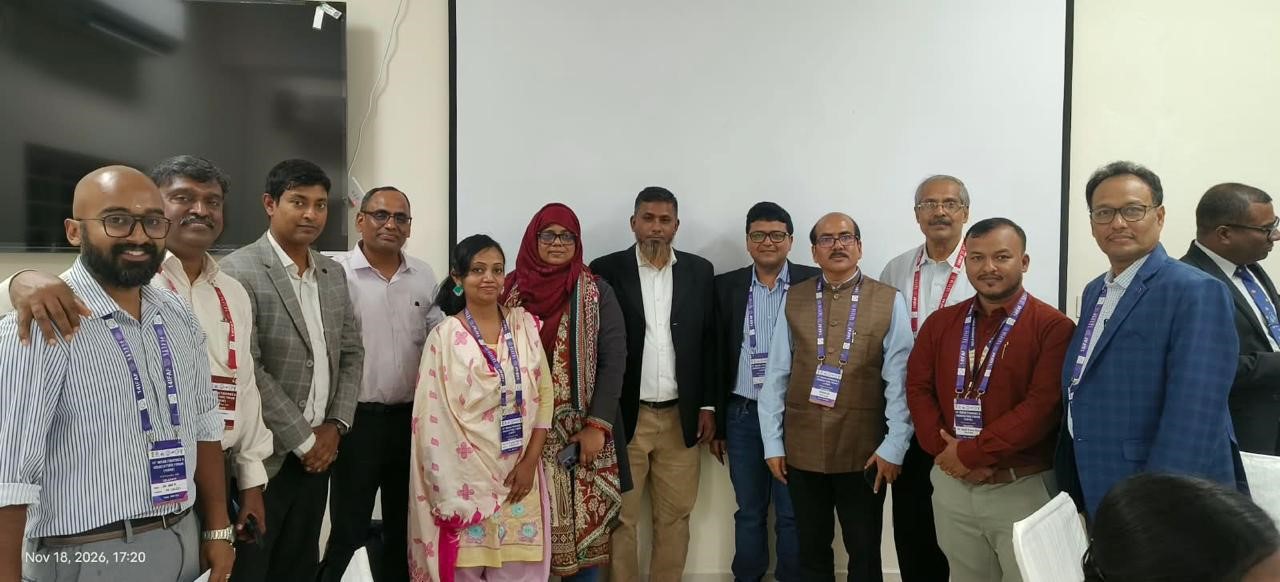
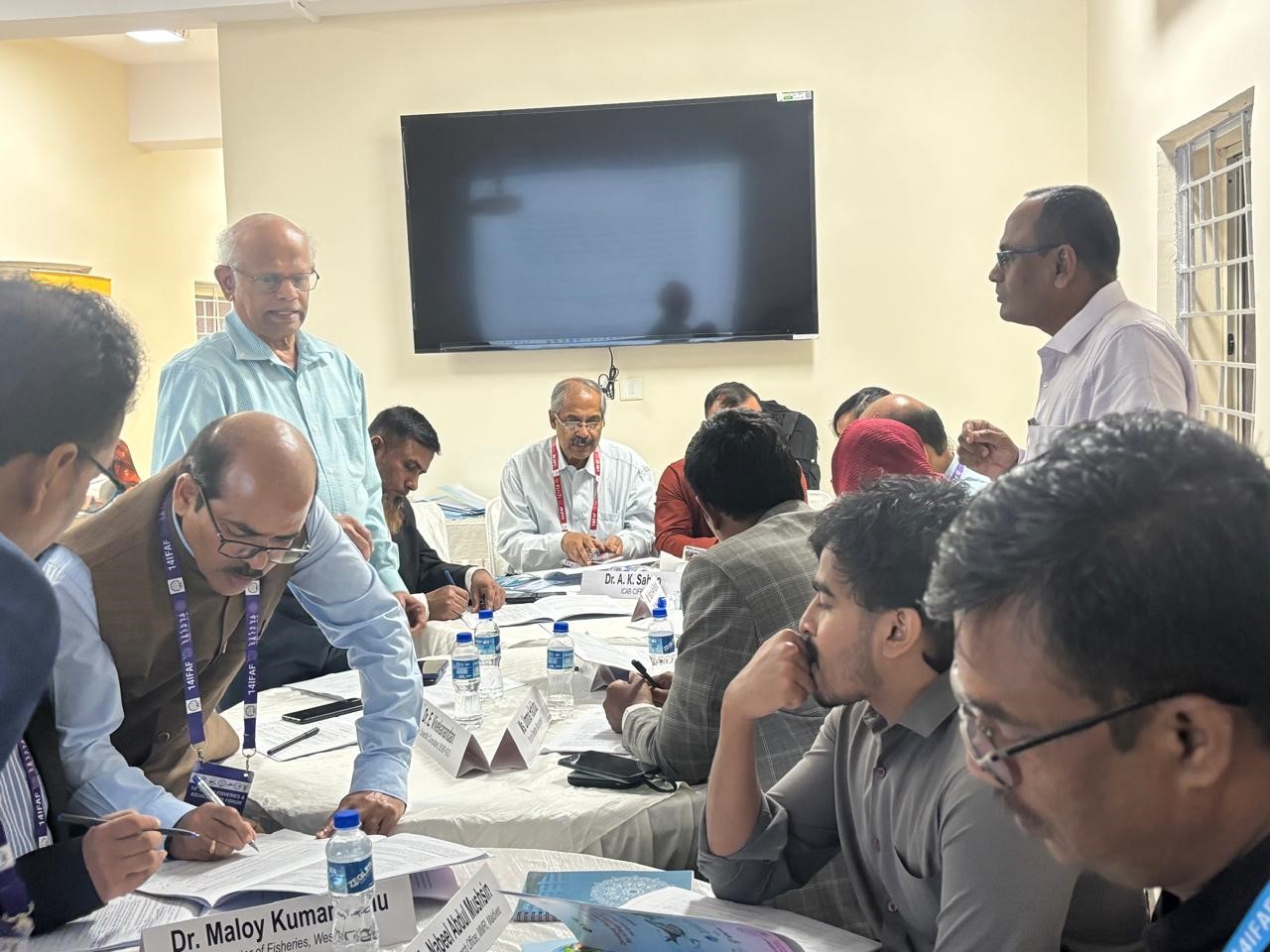
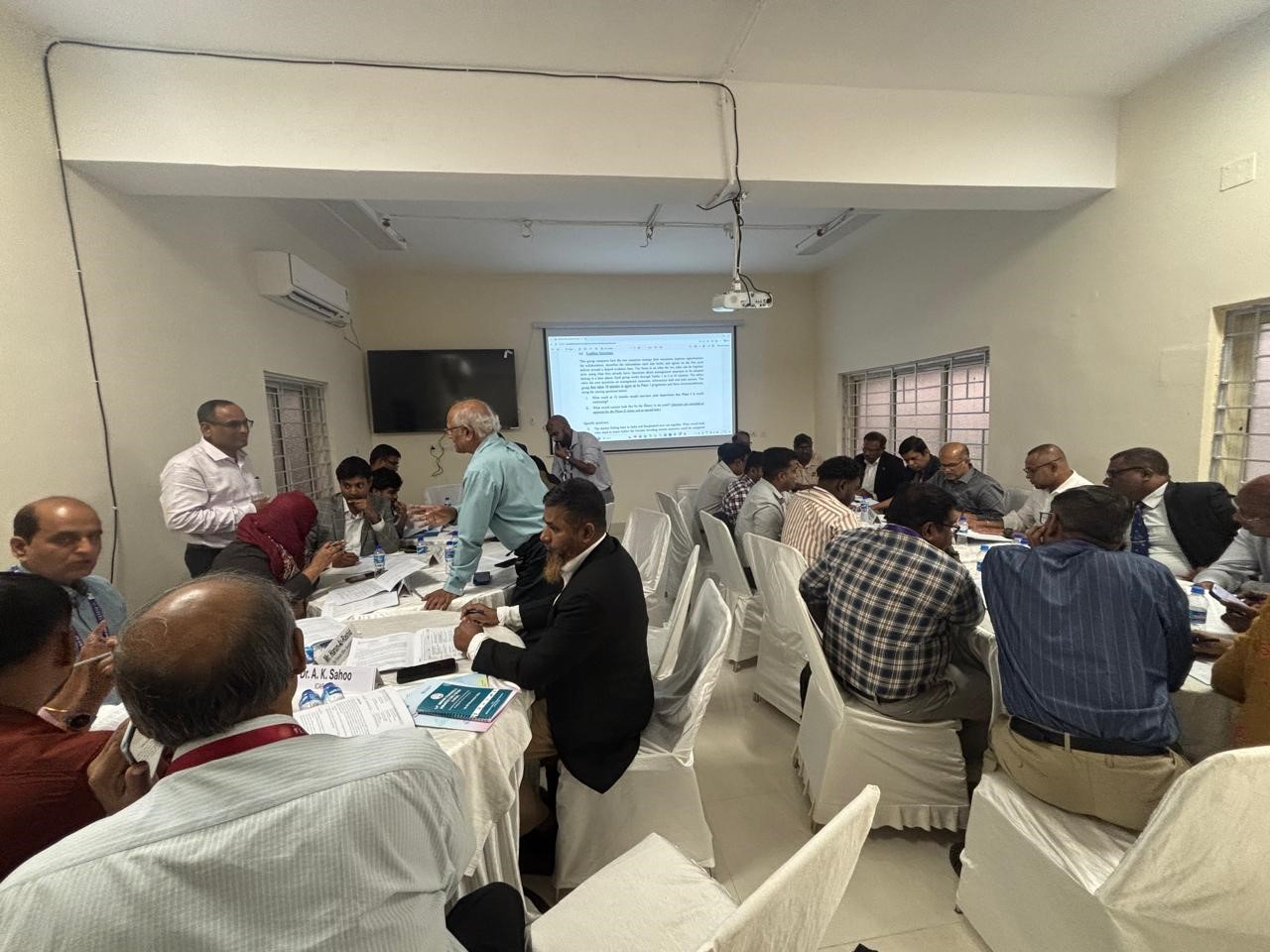
ICAR-Central Inland Fisheries Research Institute (ICAR-CIFRI), Barrackpore, emerged as the Lead Institute representing India in the regional initiative titled “Developing Shared Stocks Management Plans in the Bay of Bengal Following an Ecosystem Approach: Pilot Species – Hilsa”, during a scoping meeting organised under the Bay of Bengal Large Marine Ecosystem (BOBLME-II) Project on 18 November 2026, on the sidelines of the 14th Indian Fisheries and Aquaculture Forum at Bhubaneswar.
The meeting brought together fisheries experts, policymakers and government representatives from India, Bangladesh, Sri Lanka and the Maldives to deliberate on developing a coordinated regional framework for the sustainable management of shared Hilsa stocks in the Bay of Bengal. Dr. P. Krishnan, Director, Bay of Bengal Programme (BOBP), welcomed the delegates and underscored the importance of collaborative management of shared shad resources across national boundaries. The meeting featured lead presentations from India and Bangladesh
Representing India, Dr. A.K. Sahoo, Principal Scientist, ICAR-CIFRI, delivered the lead presentation on “Hilsa: Status of Fishery, Management Issues and Need for Cooperation”. His presentation highlighted the current status of Hilsa fisheries, key management challenges, opportunities for experience sharing based on ongoing Hilsa-related initiatives, capacity development and the need for a common regional management strategy.
The subsequent technical deliberations were conducted through a dedicated Hilsa Working Group comprising Dr. Pradip Dey, Director, ICAR-CIFRI; Dr. D.K. Meena and Dr. Piyashi DebRoy, Senior Scientists, ICAR-CIFRI, along with representatives from Central Agricultural University, Tripura; ICAR-CMFRI; ICAR-CIBA; ICAR-CIFA; ICAR-CIFE; West Bengal State Fisheries Department; the Department of Fisheries, Ministry of Fisheries and Livestock, Bangladesh; and the Maldives Marine Research Institute (MMRI).
During the deliberations, Dr. Dey, envisioned transforming Hilsa conservation from fragmented national efforts into an integrated, science-based regional management initiative, building upon the significant milestones achieved by ICAR-CIFRI over the last decade with support from the National Mission for Clean Ganga (NMCG), Ministry of Jal Shakti, Government of India. Emphasising Hilsa as a shared ecological and livelihood asset of the Bay of Bengal, he advocated a holistic river-to-sea ecosystem approach integrating habitat restoration, biodiversity conservation, scientific monitoring, climate resilience and participatory fisheries governance. He called for harmonised regional policies, collaborative research and equitable livelihood security for fishing communities. He urged the participating countries to translate scientific knowledge into a long-term regional action plan, positioning sustainable Hilsa management as a model of transboundary fisheries cooperation.
The Working Group undertook detailed deliberations on critical management interventions required for a unified regional Hilsa management framework. Key areas included marine fishing closures, seasonal protection of brood Hilsa during spawning, establishment and strengthening of inland fish sanctuaries, river conservation and protection, coastal and marine spatial planning, fishing gear regulations, juvenile protection periods, minimum legal size limits, regulation of transportation, sale and possession, livelihood support for fishers during fishing-ban periods, and effective enforcement mechanisms. The discussions also identified areas of convergence as well as differences in existing management approaches between India and Bangladesh, underscoring the importance of harmonising management measures through continued bilateral and regional consultations.
The deliberations culminated in a plenary presentation by ICAR-CIFRI, consolidating the key recommendations and priority action areas emerging from the Working Group. Dr. P. Krishnan informed that the outcomes of the scoping meeting would be further elaborated during the Regional Stakeholder Workshop for Sustainable Hilsa Fishery in the Bay of Bengal, at Banani, Dhaka, Bangladesh.
The meeting reaffirmed that developing a science-based, ecosystem-oriented and regionally coordinated Hilsa Stock Management Plan for the Bay of Bengal is essential for conserving shared fishery resources, ensuring sustainable fisheries production and safeguarding the livelihoods of millions of fishers dependent on Hilsa fisheries. ICAR-CIFRI's lead role in this initiative reinforces its scientific contribution and institutional commitment towards regional fisheries cooperation and sustainable management of this iconic transboundary fishery resource.