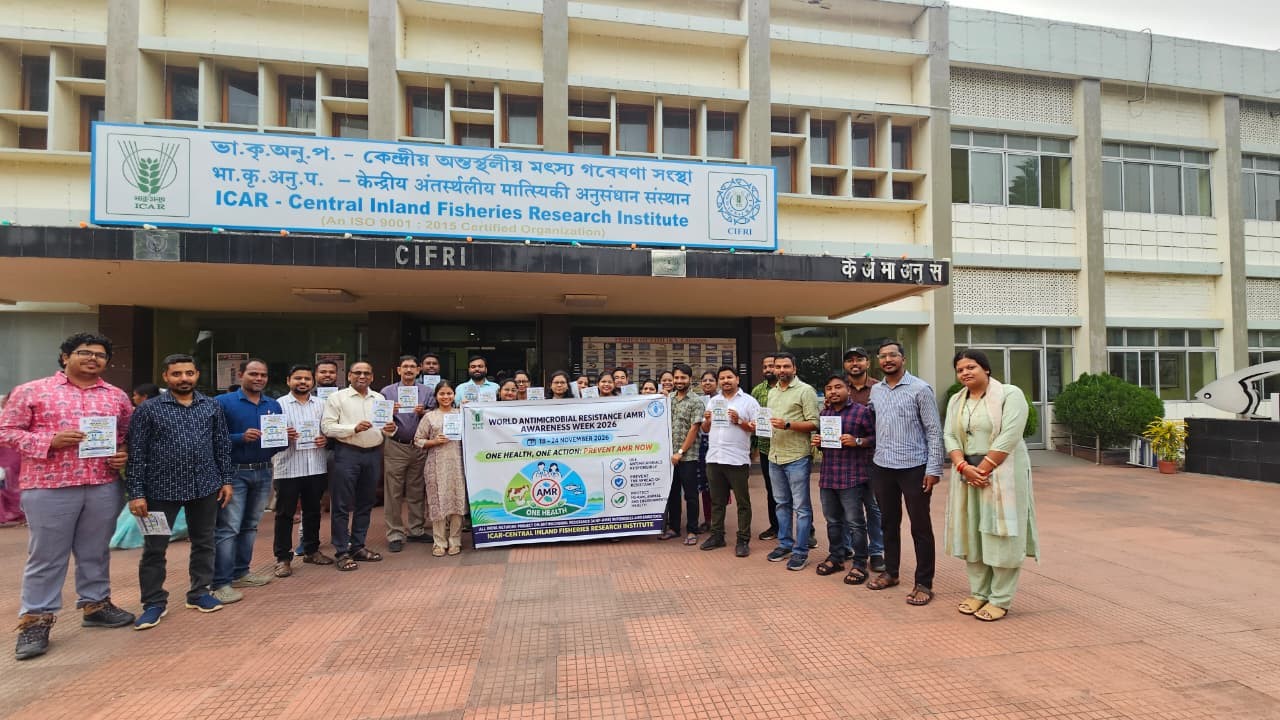
Reinforcing the importance of responsible antimicrobial use and sustainable fisheries, ICAR-Central Inland Fisheries Research Institute (ICAR-CIFRI), Barrackpore, observed World Antimicrobial Awareness Week (WAAW) 2026 from 18–24 November 2026, under the global theme “One Health, One Action: Prevent AMR Now”. A series of scientific awareness and stakeholder outreach programmes was organized to sensitize fisheries officials, aquaculture farmers, fishermen, students and academic professionals about the growing threat of antimicrobial resistance (AMR) and its implications for human, animal and environmental health.
The programmes highlighted the critical need for antimicrobial stewardship, judicious antibiotic use, AMR surveillance, preventive fish health management, improved biosecurity and sustainable aquaculture practices, emphasizing that combating AMR requires coordinated action across the One Health spectrum.
The week-long observance commenced with a technical awareness programme for 24 Officials of the Department of Fisheries (DoF), Odisha. Dr. A.K. Sahoo, Principal Investigator, and Dr. A.K. Bera, Co-Principal Investigator of the AINP-AMR project, delivered technical presentations on the emergence and dissemination of AMR in inland fisheries and aquaculture. The discussions highlighted how irrational antimicrobial use creates selective pressure, contributing to the emergence and spread of resistant bacterial populations. The role of fisheries officials in promoting evidence-based antimicrobial practices among fish farmers was particularly emphasized.
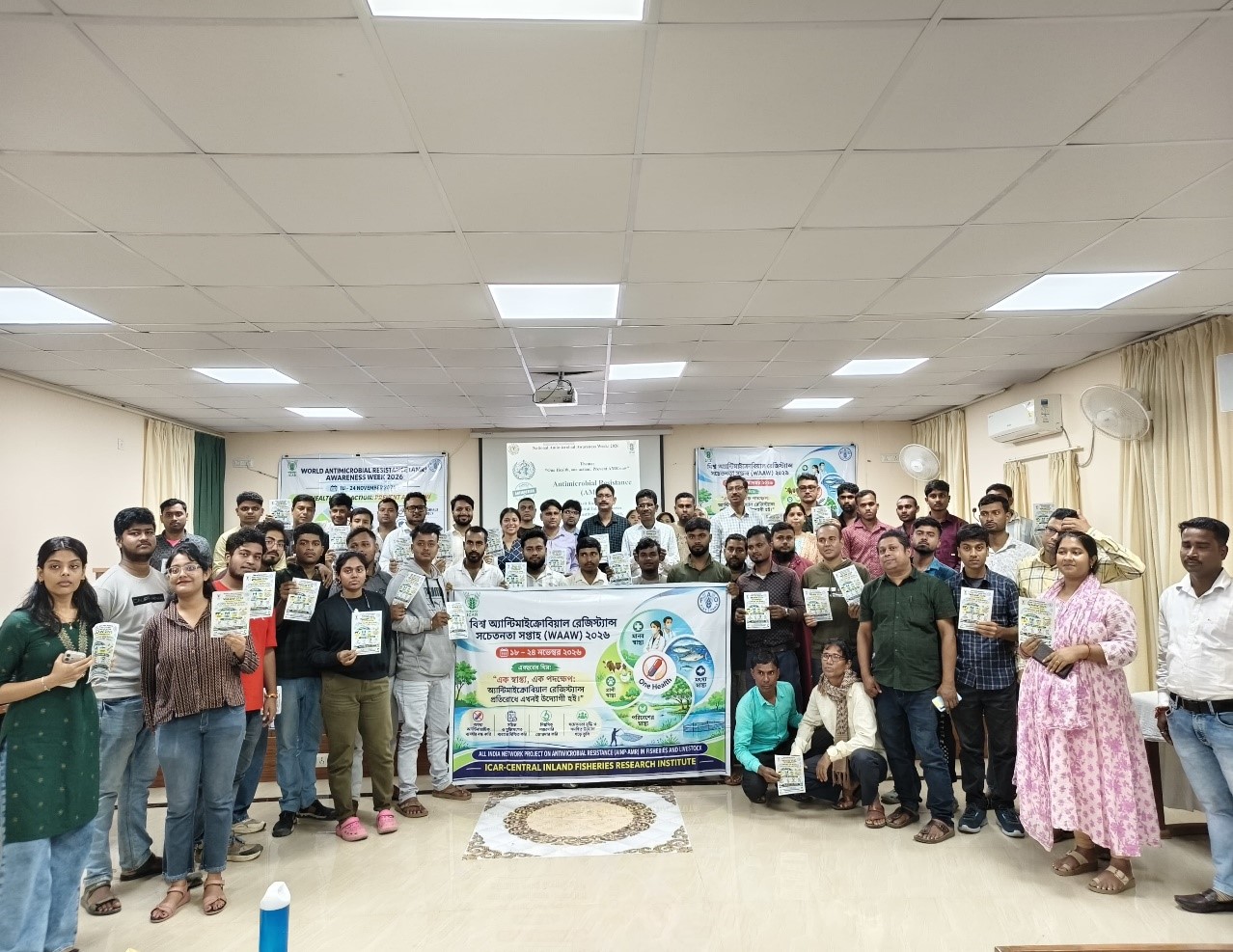
Extending the awareness initiative to the academic community, ICAR-CIFRI organized a programme at Rashtraguru Surendranath College, Barrackpore, for B.Sc. and M.Sc. students of Microbiology and faculty members. Dr. A.K. Bera delivered a comprehensive presentation on AMR mechanisms, the emergence and dissemination of resistant bacteria, and the associated risks to aquatic ecosystems and public health. A total of 84 students and Officials participated enthusiastically in the programme. An interactive quiz and discussions conducted by the ICAR-CIFRI team further strengthened scientific understanding among the students.
Taking the scientific message directly to farming communities, ICAR-CIFRI organized an outreach programme at Krishi Vigyan Kendra (KVK), Ashoknagar, involving 83 farmers and input dealers. Dr. A.K. Bera, Principal Scientist, along with research scholars Dr. Palash Gorai and Ms. Anushka Das, sensitized participants about the risks associated with inappropriate antibiotic selection, incorrect dosage and indiscriminate application in aquaculture. Practical aspects of pond hygiene, water quality management, biosecurity and preventive fish health care were also discussed. Dr. Babulal Tudu, Senior Scientist and Head, KVK Ashoknagar, Dr. Chinmoy Maji, Subject Matter Specialists and others attended the programme. The objectives of Khet Bachao Abhiyan were also disseminated among the participants. Informational leaflets were distributed, followed by interactive discussions addressing farmers' concerns.
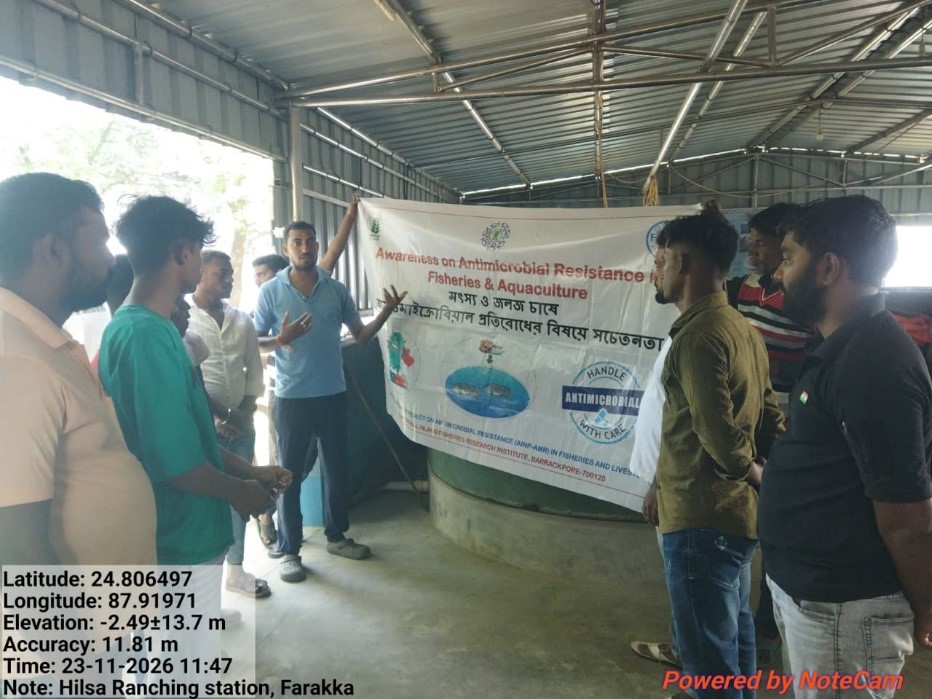
The outreach activities of AMR were also extended to the fisheries sector through a programme conducted at Farakka Hilsa Ranching Station, where 20 local fish farmers were sensitized on the adverse effects of indiscriminate antibiotic use, responsible antimicrobial practices and preventive fish health management. The programme also emphasized the importance of maintaining aquatic ecosystem health for sustainable fisheries and public health. Further, the interrelationship between reservoir and soil health was highlighted in the context of the objectives of Khet Bachao Abhiyan.
Reflecting on the significance of the observance, Dr. Pradip Dey, Director, ICAR-CIFRI, emphasized that antimicrobial resistance is not merely a fisheries or aquaculture concern but a wider One Health challenge that directly connects aquatic animal health, environmental sustainability and human well-being. He stressed that preventing AMR must begin with responsible practices at the grassroots level, particularly through avoiding unnecessary antibiotic use, strengthening preventive health management and promoting scientific awareness among farmers and fisheries stakeholders. Dr. Dey further emphasized that research institutions, fisheries departments, academic organizations and farming communities must work together to translate scientific knowledge into responsible action. Protecting the effectiveness of existing antimicrobials is a shared responsibility and an essential investment in the future of sustainable aquaculture and food security.
The week-long observance successfully strengthened scientific awareness and stakeholder engagement through a combination of technical deliberations, farmer outreach, student interactions and educational initiatives. Through these concerted efforts, ICAR-CIFRI reaffirmed its commitment to advancing AMR research, promoting responsible antimicrobial practices and strengthening sustainable inland fisheries and aquaculture through an integrated One Health approach.
The overarching clarion call of the programme was: One Health, One Action: Prevent AMR Now – Responsible Practices Today for Healthier Aquatic Ecosystems and a Safer Tomorrow.